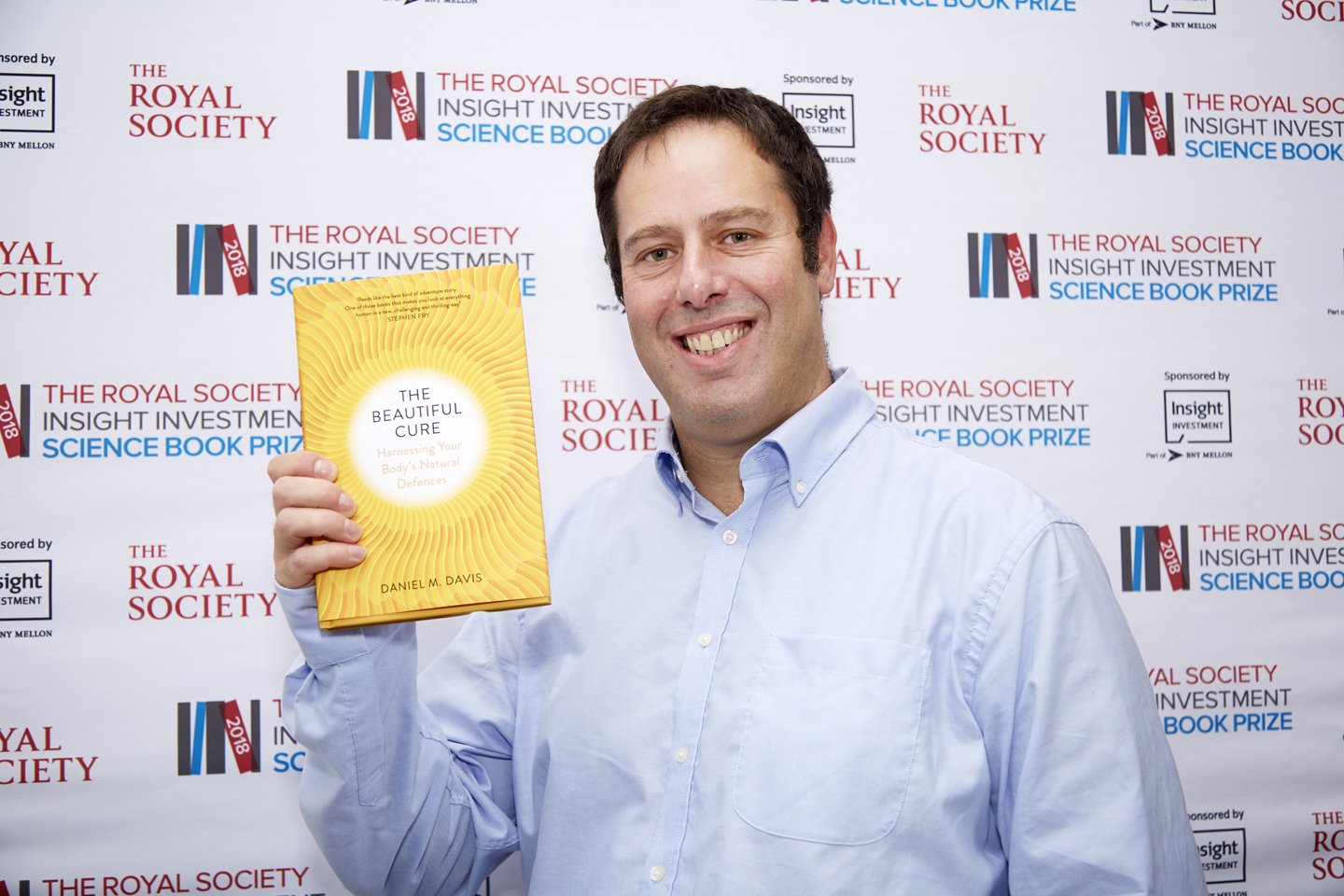
Unfortunately, I had to call an audible for my book review assignment and choose another book (since Survival of the Sickest was published a little too long ago, given the assignment guidelines). Instead, I will be reviewing Daniel M. Davis’ The Beautiful Cure: The Revolution in Immunology and What It Means for Your Health. While it is a different title and was published much more recently, the topic remains relatively the same: the human immune system.
Survival of the Sickest seemed to have more of a focus on the history of our immune system, specifically the gradual evolution of it. The Beautiful Cure, on the other hand, focuses on our knowledge of the immune system and how we’ve come to use it to begin the revolution of immunity, immunology, and immunotherapy.

One specific topic that has been focused on in the book is immunotherapy; and Davis offers multiple examples of it. One of these examples includes T-cell therapy and how it has revolutionized the treatments of multiple diseases like cancer. A recent scientific research article proves this statement true, giving an historical review of T-cell therapies and how immunotherapy has become the fifth pillar in cancer care. Two scientists mentioned — both in the article and book — are James Allison and Tasuko Honjo. The two men are known to be pioneers in the field of T-cell research, as they have jointly received the Nobel Prize in Physiology or Medicine for their work on checkpoint inhibitors.
One of their largest accomplishments was their discovery of “T-cell inhibitory signaling pathways” that, when activated, “prevent effective cancer immunity” (Singh and McGuirk, 2020). By using antibodies to block these inhibitory signaling pathways, T-cell activation was able to be restored and broad antitumour effects were clinically observed. In simpler terms, both men discovered “brakes” in our immune systems, in which certain proteins stop the production of T cells that attack tumors. By applying antibodies to these proteins, we are able to release the brakes and unlock the antitumour T cell production.
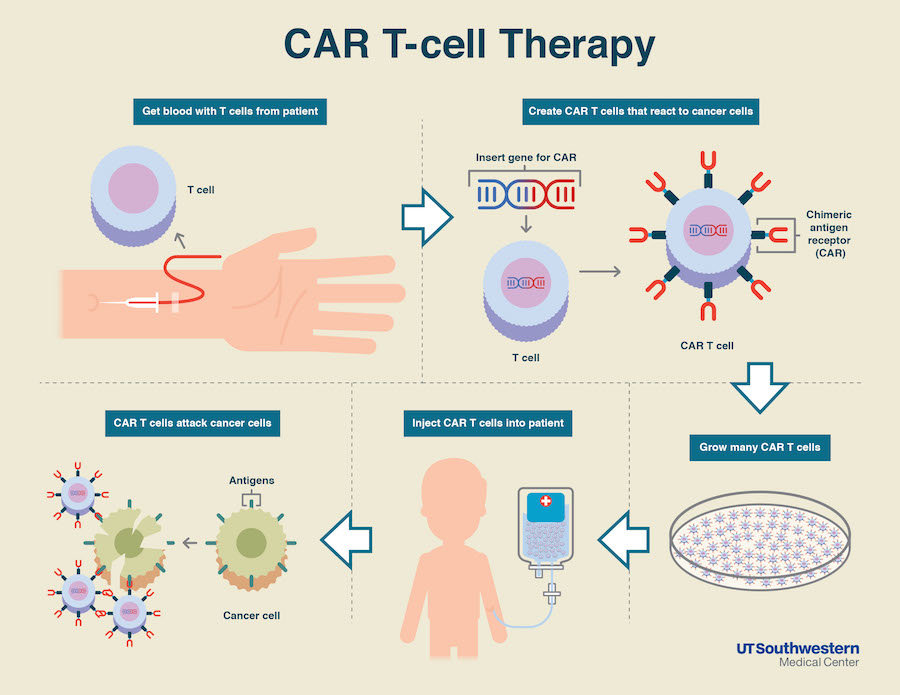
While these discoveries were made a few decades ago, scientists have built upon the field of immunotherapy and shifted the framework of T cell therapy in the form of CAR T-cell therapy, a new form that focuses on T-cell engineering and the use of synthetic T-cell receptors rather than physiological ones.
I’m looking forward to continuing to learn about T-cell research, and hopefully CAR T-cell therapy, while reading The Beautiful Cure.
Citation:
- Singh A. and McGuirk J. (2020). CAR T cells: continuation in a revolution of immunotherapy. Lancet Oncology, 21(3), 168-178. https://doi.org/10.1016/S1470-2045(19)30823-X
 ScienceHut