
Have you ever looked at yourself and said, “man, if only there was a way that I can go into my genome and change certain DNA sequences to rid myself of that unwanted trait of mine.” Well, if you have, you might be in luck!
CRISPR, or clustered regularly interspaced short palindromic repeats (I know, a mouthful), is a relatively new technology that can be used as a genetic editing tool to remove, add, or alter specific pieces of DNA. In other words, CRISPR has the ability to completely change your genes! While the technology has been under certain controversy, it has the potential to completely change the healthcare system as we know it. While CRISPR has many abilities, the most intriguing is its use is to treat genetic diseases.
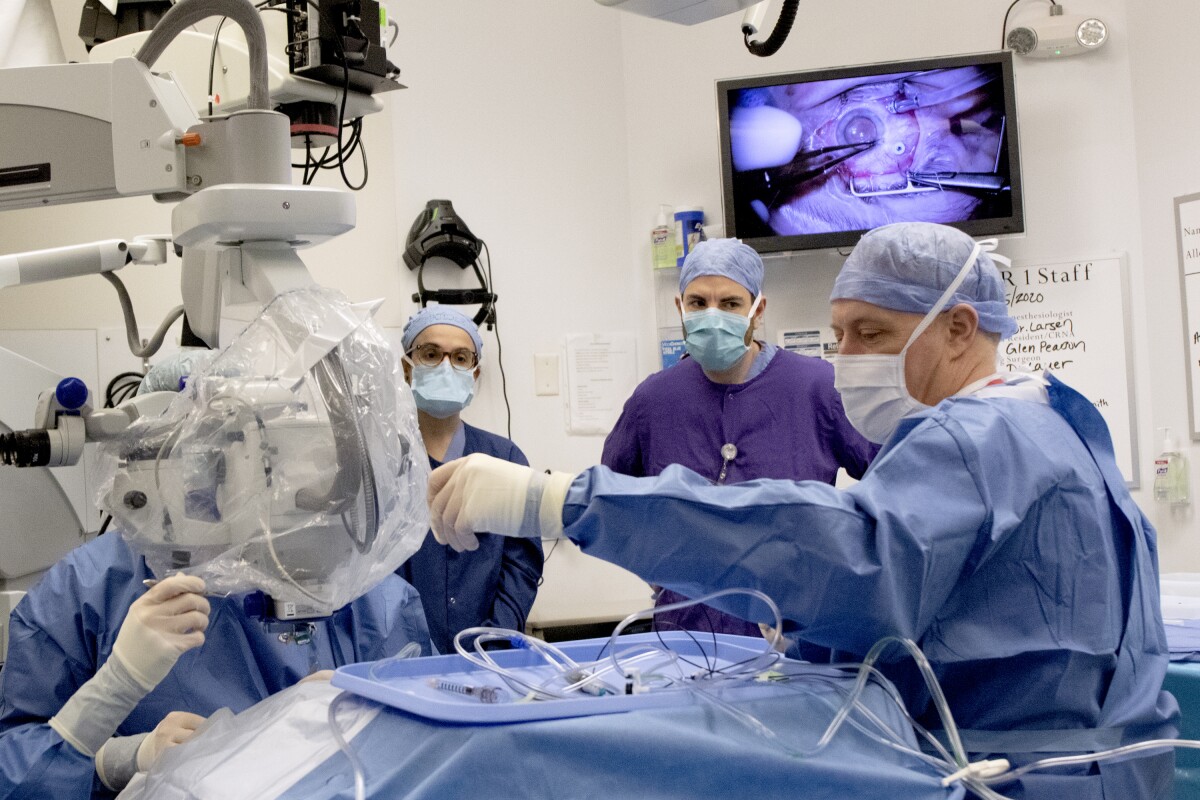
A recent article from nature discusses a CRSIPR breakthrough, as it has finally been inserted into a human body as a medical treatment for the first time in history. The patient, who has Leber’s congenital amaurosis 10 (LCA10), a rare condition that is the leading cause of blindness in childhood, has recently become the first to receive a CRISPR–Cas9 gene therapy directly into the body. So how was it done?
The gene editing technique, which is encoded in the genome of a virus, is first injected near the light-sensing photoreceptor cells in the eye, then proceeds to delete a mutation in the CEP290 gene that directly causes LCA10 (Ledford, 2020). By doing so, researchers expect the photoreceptor cells to become reactivated after being disabled by the mutation in CEP290.
The article also points to other experimental treatments used to treat patients with LCA10; one being sepofarsen. Early results have suggested that the antisense technique that sepofarson uses, which corrects an LCA10-causing mutation in the gene’s RNA, has improved the eyesight of people with LCA10. The hopes are to see similar or even better results with the CRISPR-Cas9 technique.
While it might not make the front covers of your local newspaper, the news has huge implications in the field of science and medicine. This first patient certainly makes history and marks a huge step in the use of CRISPR technology in healthcare. With this news, we are on the cusp of a potential scientific revolution, if we continue to make improvements and advancements with CRISPR. What a time to be alive!
Citation: – Ledford H. (2020). CRISPR treatment inserted directly into the body for first time. nature. https://www.nature.com/articles/d41586-020-00655-8
 ScienceHut